Graphic Novel
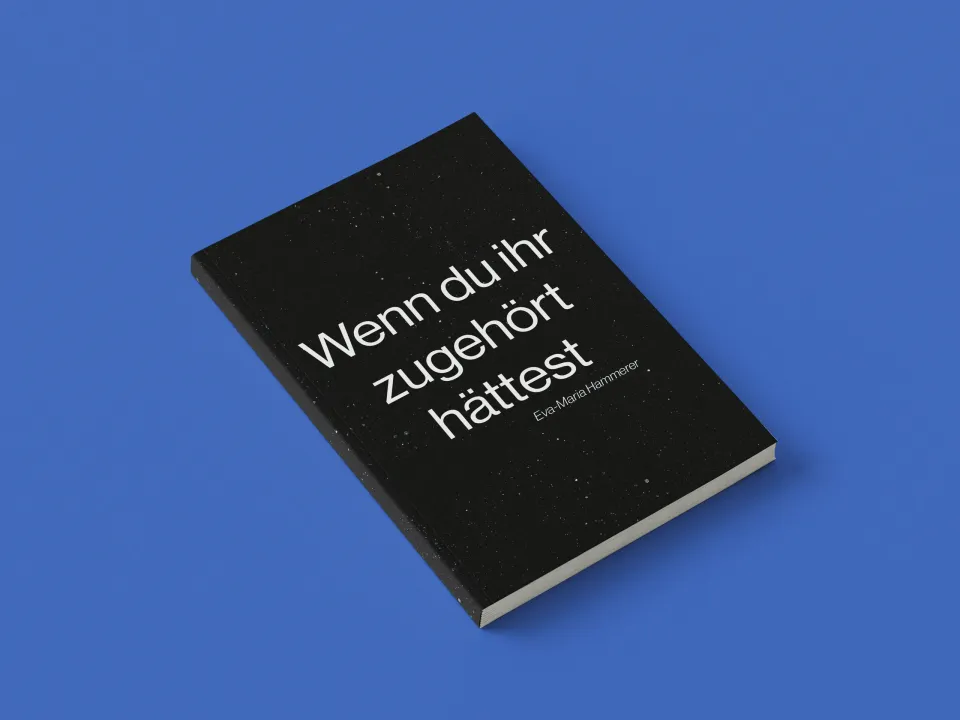
Wenn du ihr zugehört hättest
overview
Wenn du ihr gehört hättest is a graphic novel that uses the method of Design Fiction to ask: what if people realized that what they were doing was wrong? Social division is slowly rising again, and I wanted to explore whether a story from the past could help prevent the worst-case scenario.
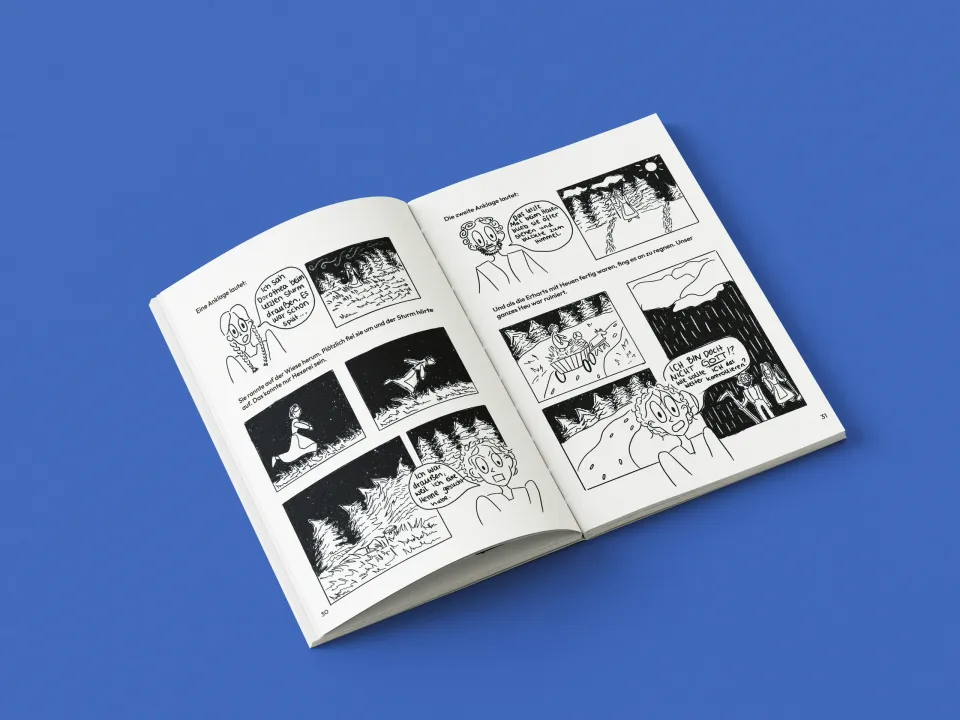
The book is based on the story of Dorothea Mayerin (died 1551), who came from an influential family in the Bregenzerwald. She was the wife of Caspar Erhat, a politically active man who served as Landammann at least twice. At that time, the Hinterbregenzerwald was partially autonomous and self-governing because of its location, and the Landammann acted as the elected head of the community. He also had enemies there, which may have led to first his daughter and then Dorothea herself being accused and convicted of witchcraft.
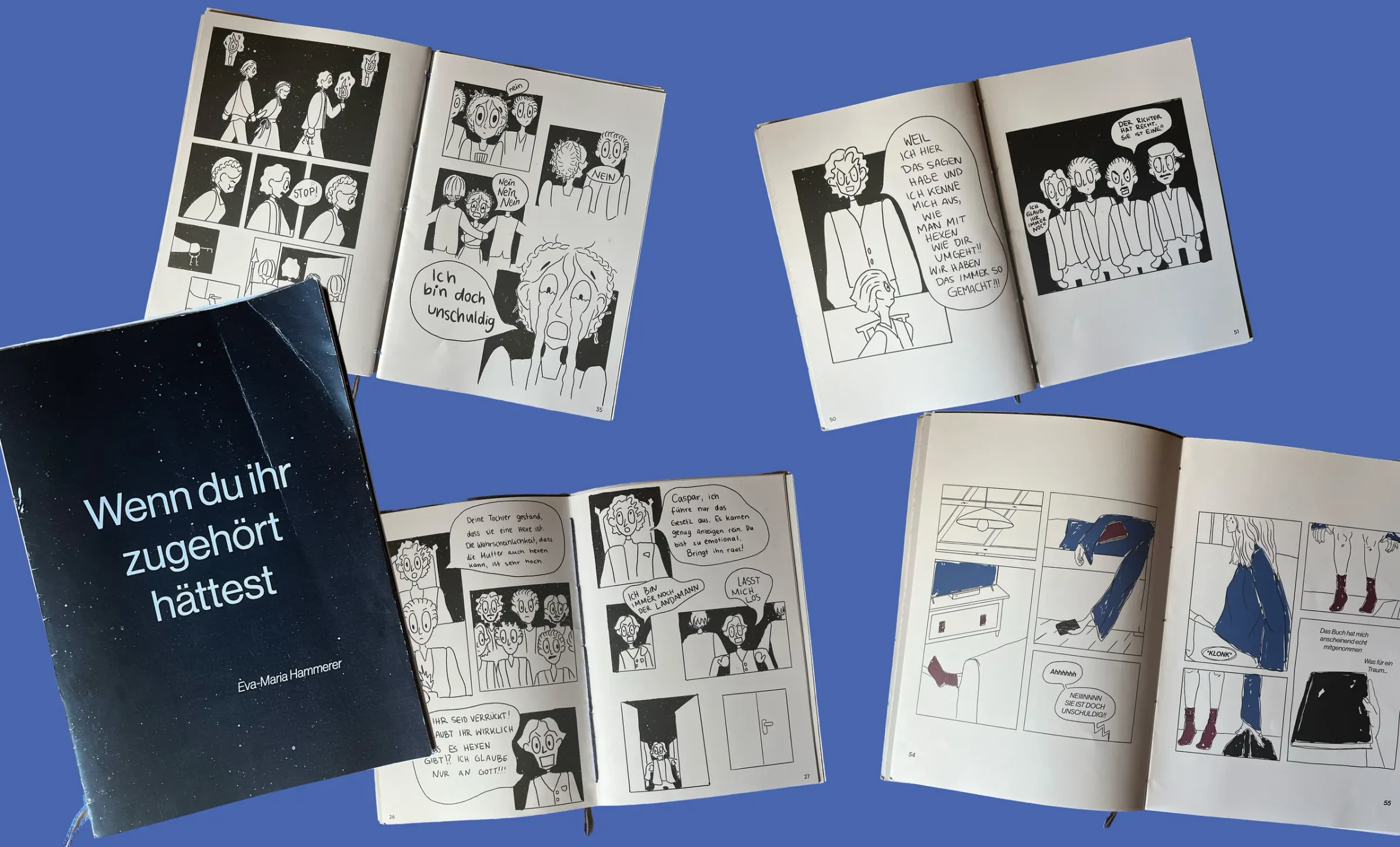
My book asks: What if someone had questioned the methods behind it all? What if someone had had the courage to speak out and say that the whole process was wrong?
process research
This is not merely a creative project but a research-based study of cognitive change. I used Design Fiction to turn a historical case into a “what if” scenario that speaks to present-day concerns.
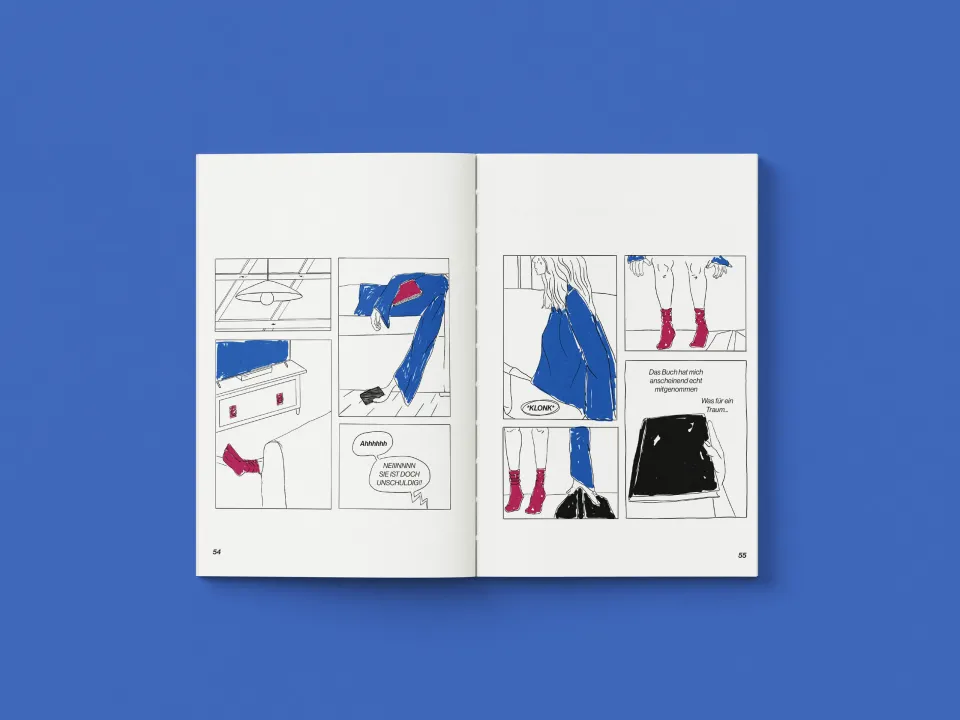
Medium: The main target audience is teens and young adults, since recent election results show that this group voted most heavily for extreme parties (e.g. the 2025 German federal election). I chose the comic format because it strongly appeals to the reader’s imagination. The reader has to actively fill in the gaps between the individual panels, which makes them a participant in the story rather than a passive observer.
Hypothesis: Can a narrative product encourage users to question ingrained judgements and regain trust in community-oriented problem-solving?
Methodology: I conduct pre- and post-tests with readers, plus a structured interview. The tests measure the story’s impact on self-reflection and openness to different perspectives. The interview lets me go deeper with participants and reflect on their views of a few specific scenes.
Objective: To demonstrate that design and storytelling can serve as tools to reduce scapegoating and promote critical thinking. It was particularly important to me that the graphic novel invites readers to experience the complexity of social opinion-forming and to recognise that the world cannot be divided into black and white, but always exists in shades of grey.
learnings
This project reflects my fundamental belief: we can only solve future problems together. It demonstrates my ability to capture complex, sensitive human emotions and translate them into a structured product that facilitates better communication and a shared understanding.